Description
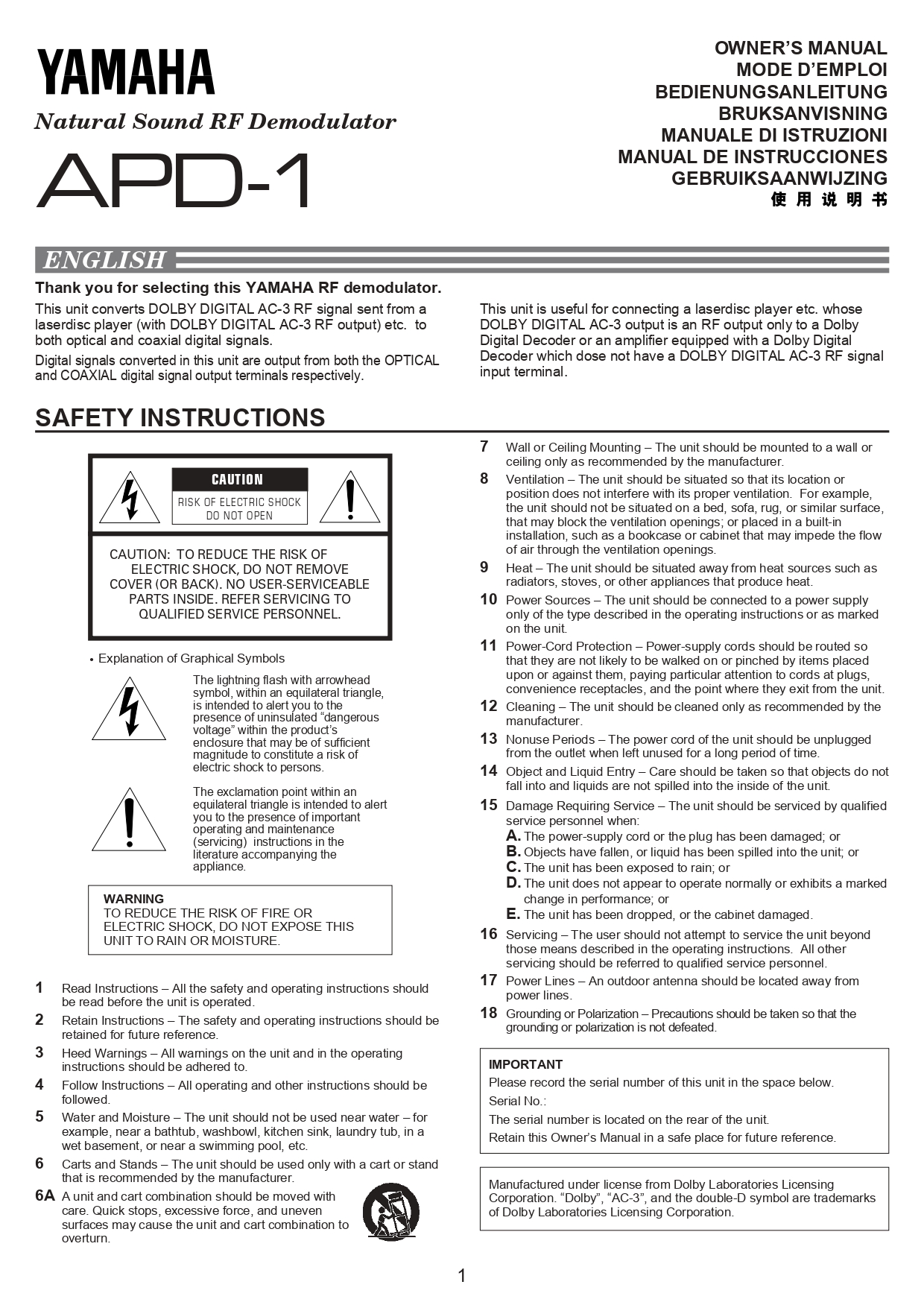
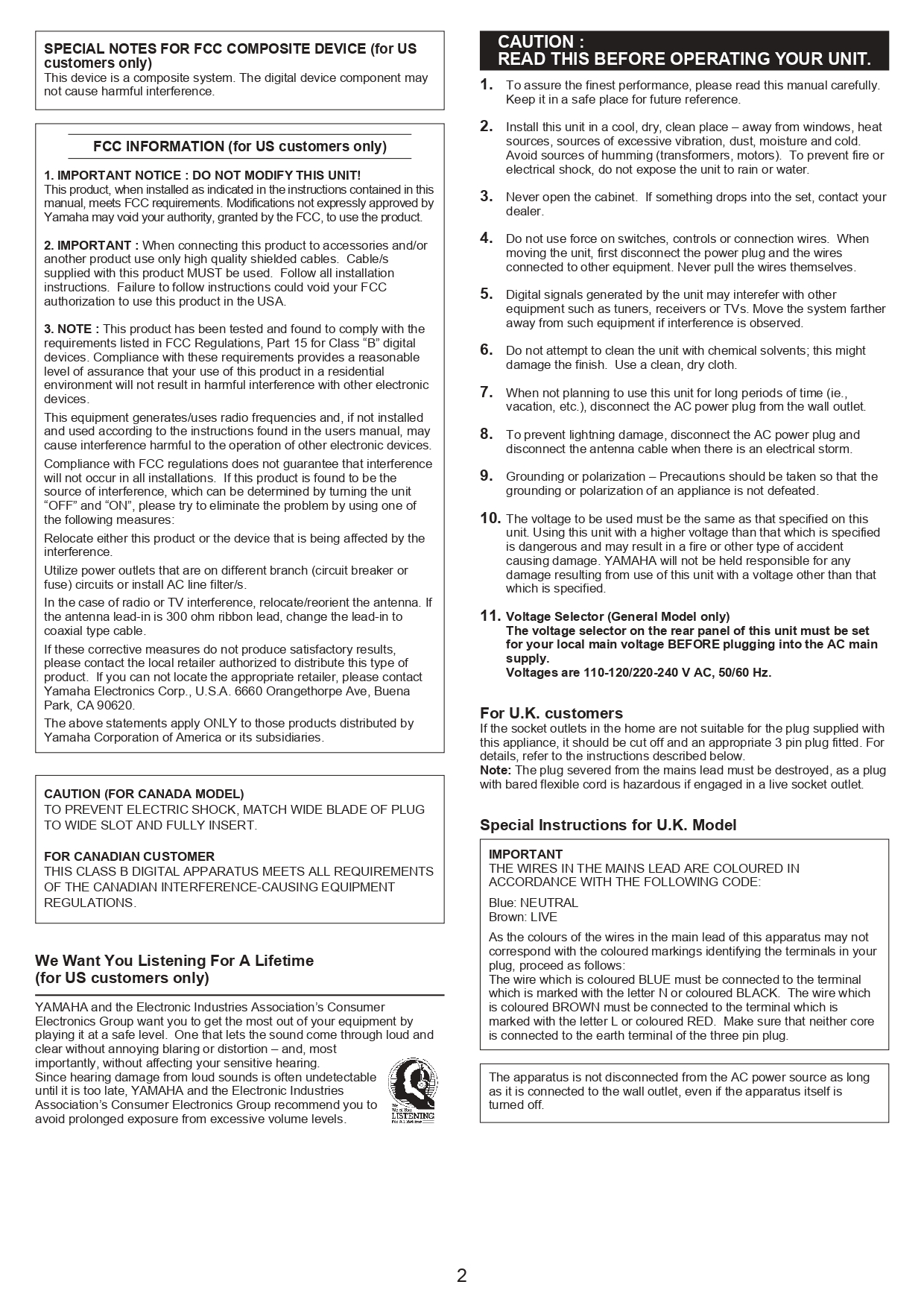
This Owner’s Manual for the Yamaha APD-1 Natural Sound RF Demodulator serves as the authoritative guide for users of this specialized audio component. Available for instant download, it is meticulously designed to ensure that owners can fully understand, safely operate, and effectively integrate the APD-1 into their home audio-visual systems. The core function of the APD-1, as a Natural Sound RF Demodulator, is to convert the RF (Radio Frequency) signal from a Laserdisc player (specifically those with a Dolby Digital AC-3 RF output) into discrete digital audio signals, primarily via optical and coaxial digital outputs. This capability was revolutionary for its time, enabling the transmission of multi-channel Dolby Digital audio from Laserdisc players to compatible receivers or digital processors, thereby unlocking an immersive surround sound experience previously unavailable. The manual dedicates significant attention to explaining this fundamental process, clarifying how the APD-1 acts as a crucial bridge between older analog-video-based Laserdisc technology and modern digital audio processing. It likely details the specific types of Laserdisc players compatible with the APD-1, emphasizing the requirement for an AC-3 RF output. Furthermore, it would explain the advantages of using digital outputs (optical and coaxial) over analog connections for multi-channel audio, highlighting the purity and fidelity of the digital signal. The manual’s introductory sections typically focus on safety instructions, a paramount concern for any electronic device. These sections are not mere formalities but essential guidelines to prevent personal injury and equipment damage. They would include warnings about electrical shock, proper ventilation, avoiding liquid exposure, and handling the unit with care. These safety advisories are often accompanied by universally recognized graphical symbols, such as the lightning bolt for dangerous voltage and the exclamation mark for general caution, making them easily understood across different linguistic backgrounds. This emphasis on safety underscores Yamaha’s commitment to user well-being and the longevity of the APD-1. Beyond initial setup and safety, the manual delves into the operational aspects of the APD-1. While a demodulator might seem straightforward, proper understanding of its indicators and any potential controls is crucial. This could include explanations of LED indicators for power, signal detection, or error states. Although the APD-1 is primarily a “set and forget” device once connected, the manual ensures users understand what each visual cue signifies. The overall structure of the manual is designed for clarity and ease of use, progressing logically from foundational information to more specific operational details. This systematic approach ensures that both novice users and seasoned audiophiles can quickly find the information they need, making the APD-1 a user-friendly component despite its specialized function. The clear and concise language used throughout the manual, presented in multiple languages, further enhances its accessibility and utility, ensuring that a broad international audience can benefit from its instructions.
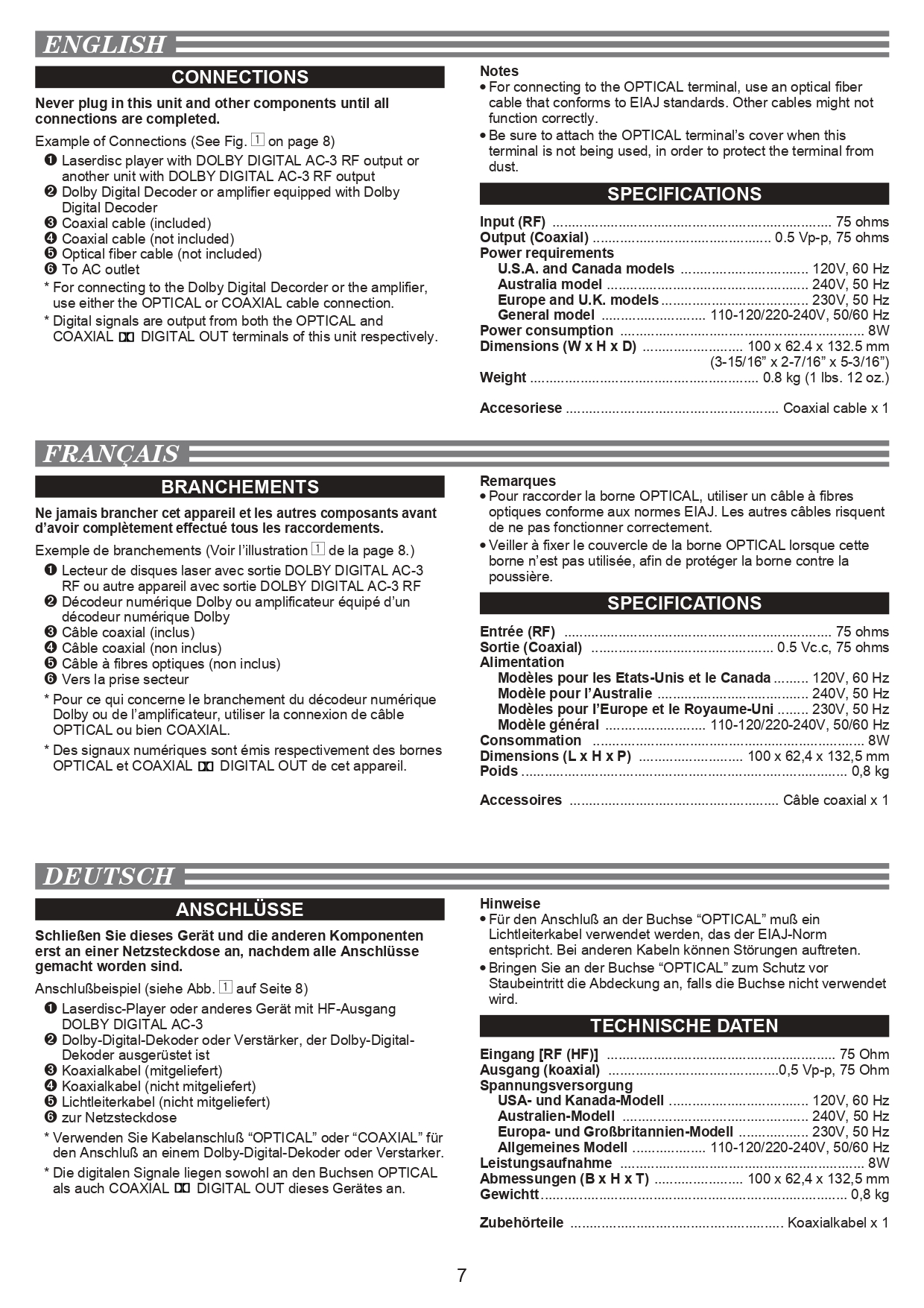
The Yamaha APD-1 Natural Sound RF Demodulator Owner’s Manual goes beyond basic operational guidelines to provide comprehensive advice on optimal setup and troubleshooting, making it an invaluable resource for users seeking to maximize their audio experience. The manual meticulously details the connection procedures for the APD-1, a critical step for its proper functioning. It would provide clear, often illustrated, instructions on how to connect the RF output from the Laserdisc player to the APD-1’s input, and then how to connect the APD-1’s digital outputs (optical or coaxial) to a compatible Dolby Digital receiver or pre-processor. This section is vital as incorrect connections can lead to no sound, distorted audio, or a lack of surround sound functionality. The manual might also offer guidance on cable types and lengths, emphasizing the importance of high-quality digital audio cables for optimal signal integrity. Recognizing that users might encounter issues, the manual includes a robust troubleshooting section. This segment is designed to help users diagnose and resolve common problems without needing to contact technical support. It would likely present a list of symptoms (e.g., no sound, no surround sound, distorted audio) and corresponding probable causes and solutions. For instance, it might advise checking all cable connections, verifying that the Laserdisc player is outputting an AC-3 RF signal, or ensuring the receiving amplifier is set to the correct digital input. This proactive approach empowers users to independently address minor issues, enhancing their overall satisfaction with the product. Furthermore, the manual often provides maintenance and care instructions to ensure the longevity and optimal performance of the APD-1. This could include recommendations for cleaning the unit, avoiding extreme temperatures or humidity, and ensuring proper ventilation to prevent overheating. While the APD-1 is a robust device, adhering to these guidelines can significantly extend its lifespan and maintain its “Natural Sound” quality. The manual also emphasizes the importance of using the unit within its specified electrical parameters, particularly for different regional models, to prevent damage from incorrect voltage supply. The “IMPORTANT” section on the cover highlights the critical aspect of recording the serial number of the unit, advising users to place it in the designated space within the manual. This simple yet crucial instruction serves multiple purposes: it aids in product registration, facilitates warranty claims, and is essential for identification in case of theft or loss. This small detail underscores the manual’s comprehensive approach to ownership, extending beyond mere operation to encompass practical aspects of product management and security. By covering setup, troubleshooting, maintenance, and administrative details, the manual ensures that users have a complete understanding of how to properly care for and utilize their Yamaha APD-1, transforming it from a mere electronic device into a fully integrated and dependable component of their home entertainment system, consistently delivering the intended immersive audio experience.
The Yamaha APD-1 Natural Sound RF Demodulator Owner’s Manual, available for instant download, serves as an exemplary guide, not just for operating the device, but also for ensuring its safe and effective integration into a home entertainment setup. Its commitment to user safety is evident from the outset, with detailed CAUTION and WARNING sections strategically placed to catch the user’s attention. The manual explicitly warns against the RISK OF ELECTRIC SHOCK and the danger of fire, clearly stating that covers should not be removed by unauthorized personnel, emphasizing that servicing should be performed only by qualified service personnel. This crucial advisory prevents accidental injury or damage to the unit from improper handling. Beyond the general warnings, the manual elaborates on specific safety precautions in a numbered list, providing practical and actionable advice. For instance, it details the importance of proper ventilation (Item 7), stating that the unit should not be situated so that its location or position interferes with its proper ventilation, and should not be placed on a bed, sofa, rug, or similar surface that may block ventilation openings. It also advises against placing the unit in a built-in installation such as a bookcase or cabinet unless proper ventilation is provided. This level of detail ensures that users understand the underlying reasons for safety guidelines, promoting adherence. The manual also addresses heat sources (Item 9), advising against placing the unit near radiators, heat registers, stoves, or other appliances that produce heat, which could lead to overheating and potential damage. Furthermore, it covers power supply (Item 10), explicitly stating that the unit should be connected to a power supply only of the type described in the operating instructions or marked on the unit. This prevents damage from incorrect voltage. The warnings extend to power cord protection (Item 11), emphasizing that power-supply cords should be routed so that they are not likely to be walked on or pinched by items placed upon or against them, paying particular attention to cords at plugs, convenience receptacles, and the point where they exit from the unit. This thoroughness in outlining potential hazards and preventive measures demonstrates Yamaha’s dedication to user safety and product longevity. The manual’s attention to detail extends to the proper handling of the unit itself. It provides instructions on avoiding heavy objects or liquids on the unit (Item 14) and ensuring the unit is serviced by qualified personnel (Item 16). It also includes a crucial WARNING regarding FIRE OR ELECTRIC SHOCK from exposure to rain or moisture (Item “TO REDUCE THE RISK OF FIRE OR ELECTRIC SHOCK, DO NOT EXPOSE THIS UNIT TO RAIN OR MOISTURE”), further solidifying the manual’s commitment to safety. This comprehensive approach to safety, coupled with clear, multi-language instructions, positions the Yamaha APD-1 manual as an exemplary resource for users, ensuring they can operate their demodulator safely and effectively for years to come, truly experiencing the “Natural Sound” as intended.